Your plant missed the quarter again and the group is asking why

Your plant is missing its numbers.
Here's the way back in 90 days.

The 5-10-20 method behind 100+ plant recoveries.
Late orders, slow ramp-ups, complex transfers.
Read it in an evening. Use it on Monday.

One case from the book: past-due backlog from $2.86M to $448K in three months.

Trusted by operations leaders atTHALESBOMBARDIERSMITHSGENERAL DYNAMICSFAURECIAALSTOMSPXGKNBÜHLERBOSCHMICROPORTTYCOINGENICOSCHINDLER
Monday, 7:42 am

"Why did your plant miss the quarter again?"

Week one, the Exec Leadership Team sends a VP to the plant to help.

Week two, a different VP.

Week three, the SVP of Operations.

Week four, someone from Finance to understand the cash picture.

By week five, the plant GM is running two daily meetings he did not run before.

Sunrise call at 6:30am. Sunset call at 5:30pm.

Each one needs a deck.

Each deck needs numbers pulled from four systems.

Each set of numbers needs a story.

The plant GM now spends four hours a day preparing to talk about the plant.

He is not on the floor.

The backlog is still growing.

The customer now calls the group directly.

And your next board review is in three weeks.

This book was written for that week.

Buy the book →


Frederic GomerFrederic Gomer
100+turnarounds led with his team over 20 years
About the author

Frederic Gomer

Managing Partner at B2G Consulting.

20 years leading operational turnarounds across 100+ plants.

Hired by Schindler, Honeywell, Smiths, TK Elevator, Thales, GKN.

This book is the method his teams apply on site, written down.

5days

to diagnose the real problem

10weeks

to stop the bleeding

20weeks

to lock in stability

Proof, from the book

Past-due backlog,
one recovery.

A real plant from the book. Past-due orders peaked at $2.86M in December. Three months of the method later: $448K.

0%

past-due backlog in 3 months

Show me how the backlog came down →
Nov$2.44M
Dec$2.86M
Jan$1.63M
Feb$1.23M
Mar$448K
Readers

What the readers say about the book:

★★★★★

Great Book!

Very easy to read and gives a clear path to fix major manufacturing and supply chain issues.

VP Ops, Swiss Medtech
★★★★★

Straight to the point!

It is great to read a management book which does not take 50 pages per idea. This one is straight to the point, one idea per page, very concrete ways of dealing with tough situations in complex manufacturing set-ups.

VP Operational Excellence, German Industrial Machinery
★★★★★

Strongly recommended for turnarounds

Very good reading. Short book with good tips. I strongly recommend for those facing the need of a turnaround.

VP Operational Excellence, French Defense Manufacturer
Ready?

One evening to read. Ninety days to turn it around.

Buy the book →
The Turnaround Blueprint
2 min 36 · from the author

"If you are watching this, you probably have a plant that is not working as well as it should."

Late orders piling up. OTD slipping. Inventory and rework you cannot explain. An interim manager or group support that has not turned the trend.

In 2.5 minutes, Frederic explains why he wrote the book and what it gives you: what to check, what to fix first, and how to hold the gains in under 90 days.

Buy the book
Look inside

Nine steps. One tool for each.

Click on the steps to see the details.

5 days · Diagnose10 weeks · Stop the bleeding20 weeks · Stabilise
5 · Diagnose

Step 1. The fast assessment

Why it matters

Most plants start fixing before they know what is broken. Five days on the floor tells you whether it is capacity, materials, quality or flow.

What you get from the book

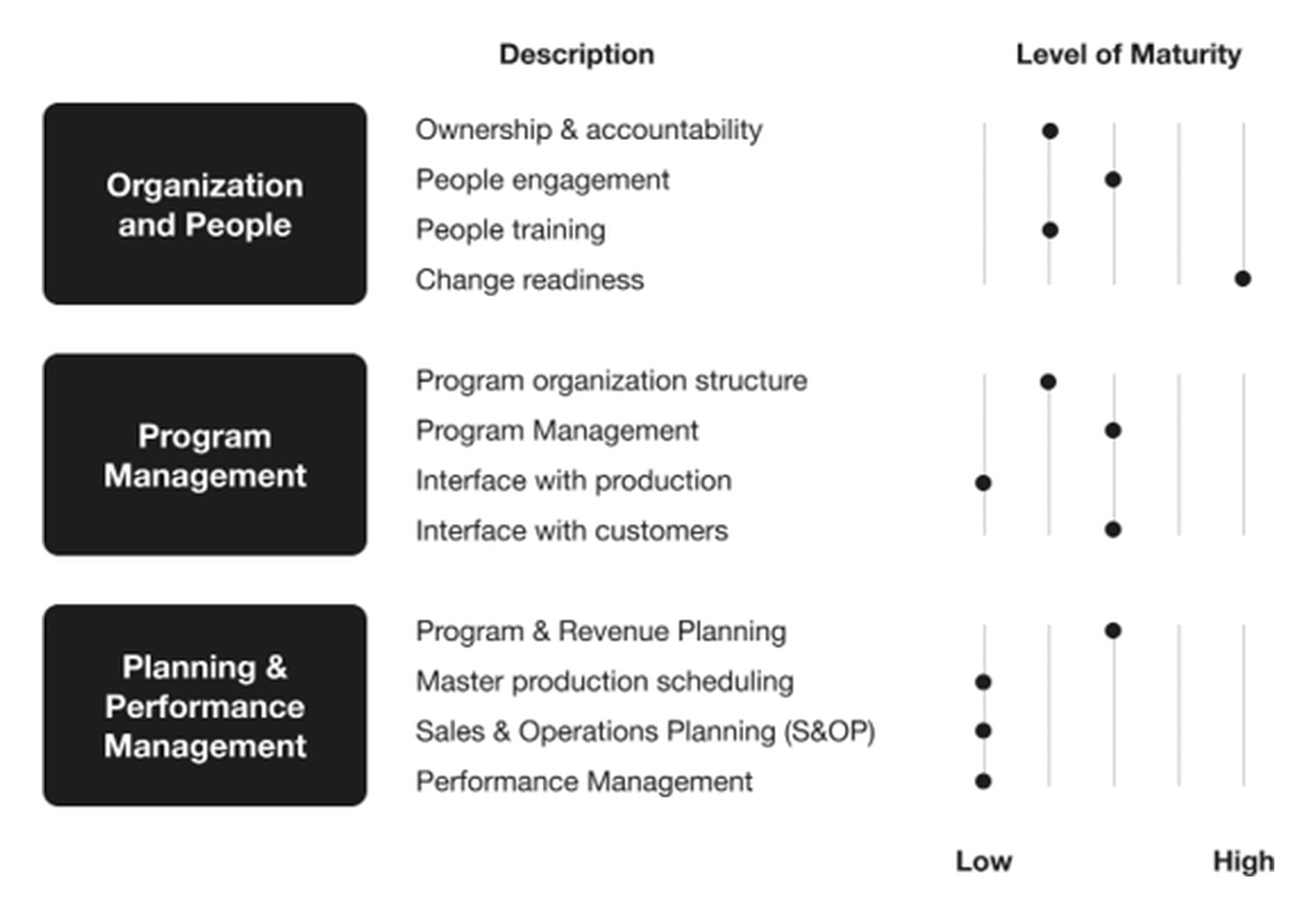
Score your plant on 12 dimensions, from ownership to S&OP, and see in one page where it is weakest.

In practice

Five days of floor walks, data pulls and interviews, and a one-page maturity score your leadership team can argue about, with the evidence behind it.

The Turnaround BlueprintStep 1
Fig. 6, Maturity assessment
5 · Diagnose

Step 2. The recovery plan

Why it matters

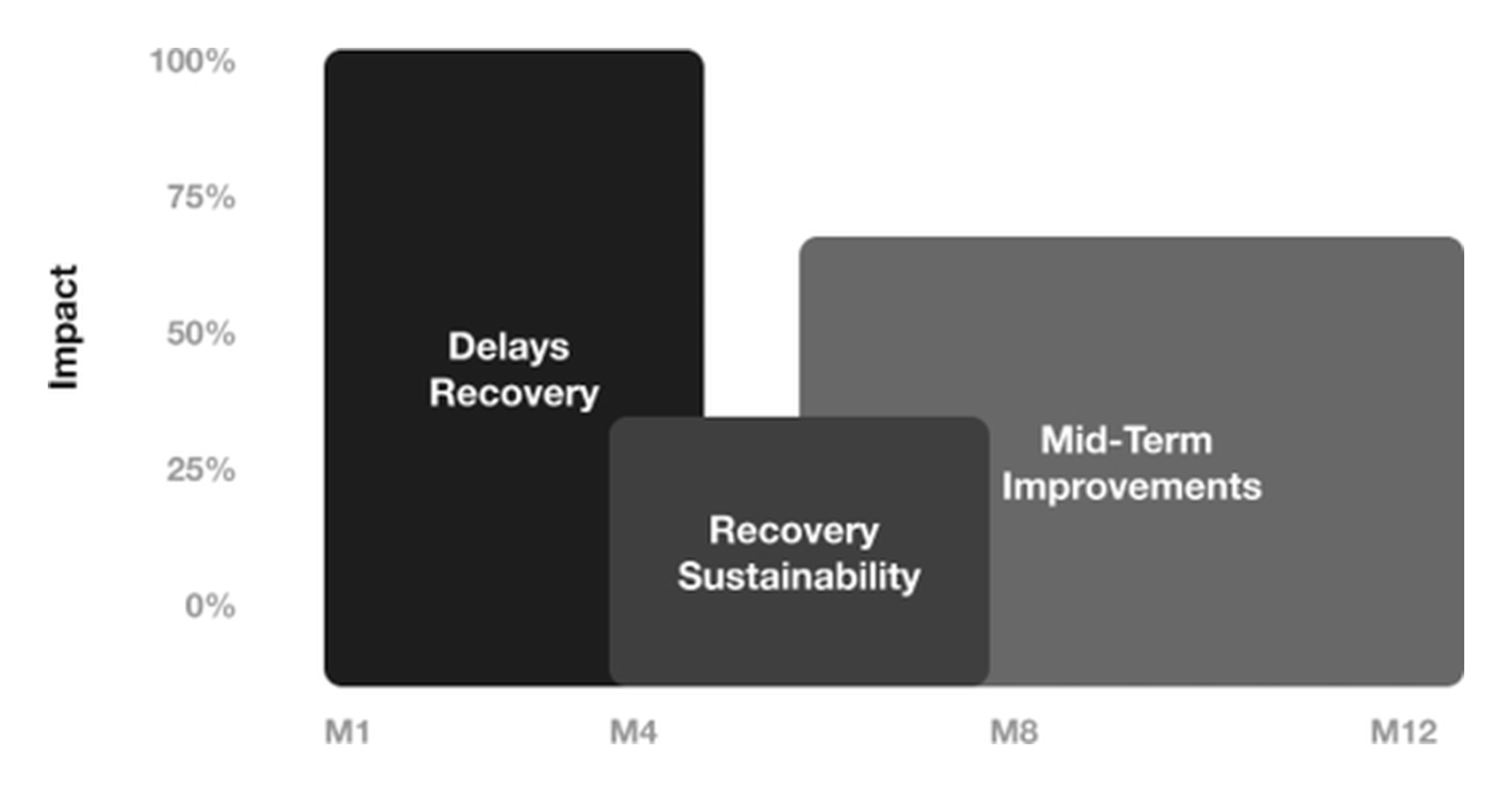
Without a timeline, a recovery becomes an endless list of actions. This splits it into three waves you can commit to.

What you get from the book

Plan the delay recovery first, then sustainability, then mid-term improvements, each with its own impact curve.

In practice

Three waves with dates: recovery first, then sustainability, then mid-term improvements, each tied to a measurable outcome.

The Turnaround BlueprintStep 2
Fig. 15, Turnaround timeline
10 · Stop the bleeding

Step 3. The recovery team

Why it matters

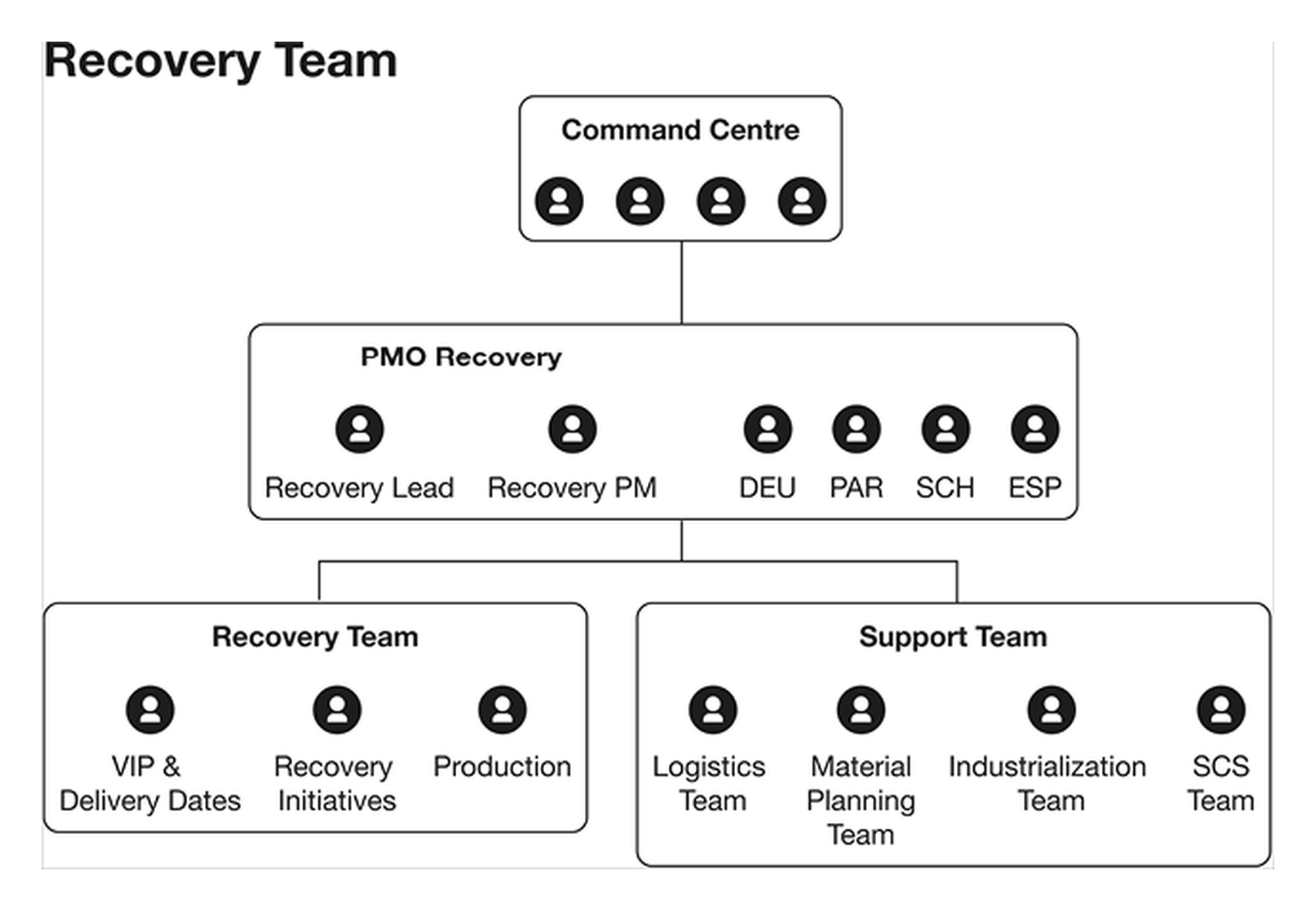
A turnaround run as a side project fails. It needs one command centre and named owners, sitting under one roof.

What you get from the book

Set up the command centre, the recovery PMO and the support teams, and know who decides what by Monday.

In practice

A command centre, a recovery PMO and named owners, so no action ends with five names and nobody in charge.

The Turnaround BlueprintStep 3
Fig. 16, Turnaround team composition
10 · Stop the bleeding

Step 4. The recovery framework

Why it matters

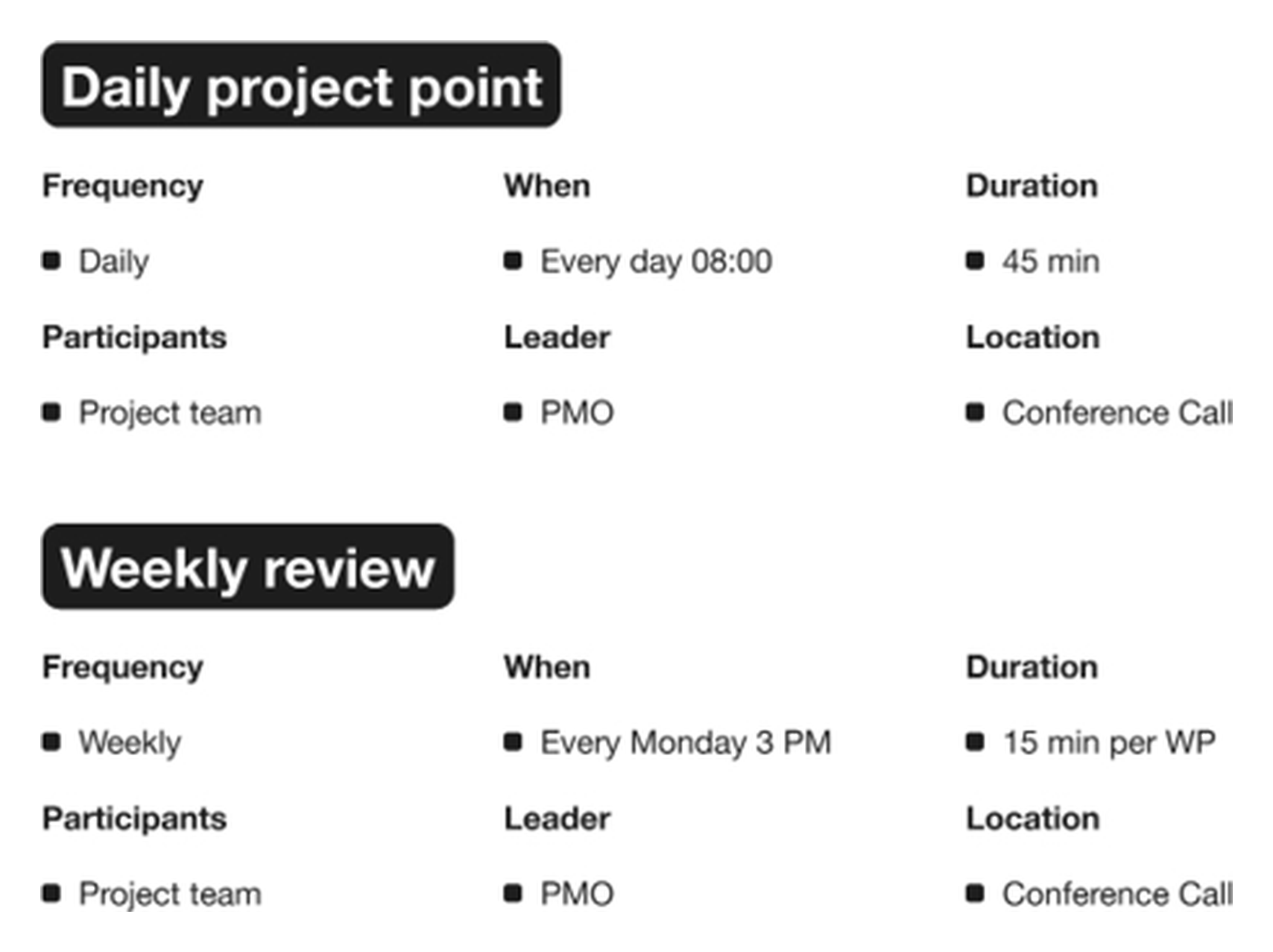
The number one reason turnarounds fail: firefighting with no defined way to recover. Routines come before actions.

What you get from the book

Run a 45-minute daily project point and a weekly review per work package, with fixed times, leaders and participants.

In practice

A 45-minute daily project point and a weekly review per work package, with the escalation path written down before you need it.

The Turnaround BlueprintStep 4
Fig. 21, Recovery routines
10 · Stop the bleeding

Step 5. The Return to Green plan

Why it matters

The group wants a date. This plan gives one: when every late order is recovered, tracked line by line.

What you get from the book

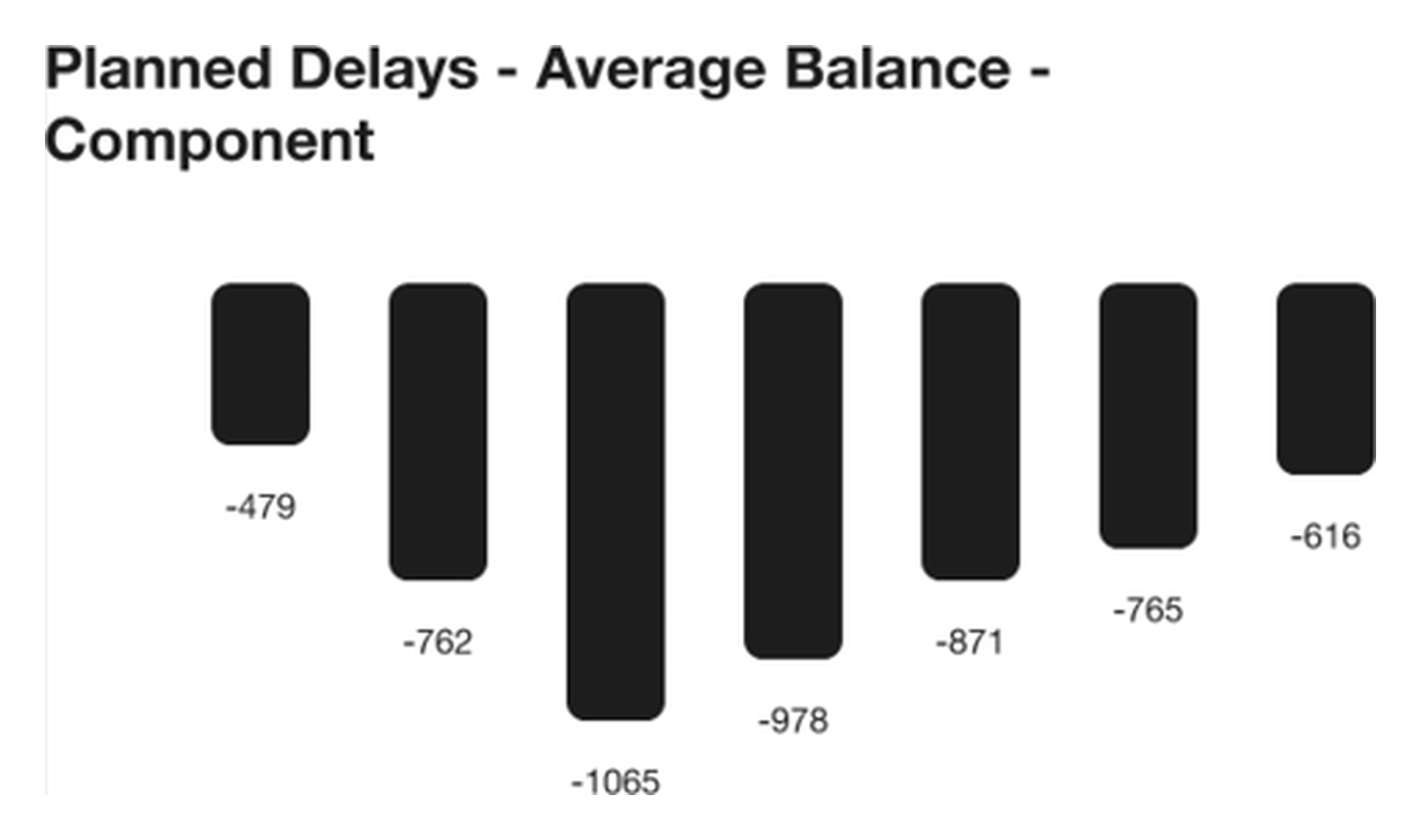
Track the planned delay balance week by week on your 3 to 5 most critical lines, and see the trend turn.

In practice

A dated plan per critical line, updated weekly, that becomes the one page you show the group.

The Turnaround BlueprintStep 5
Fig. 25, Return to Green plan
10 · Stop the bleeding

Step 6. Execution and short interval control

Why it matters

Monthly reporting is too slow in a crisis. Work moves in small, owned packages reviewed in short loops.

What you get from the book

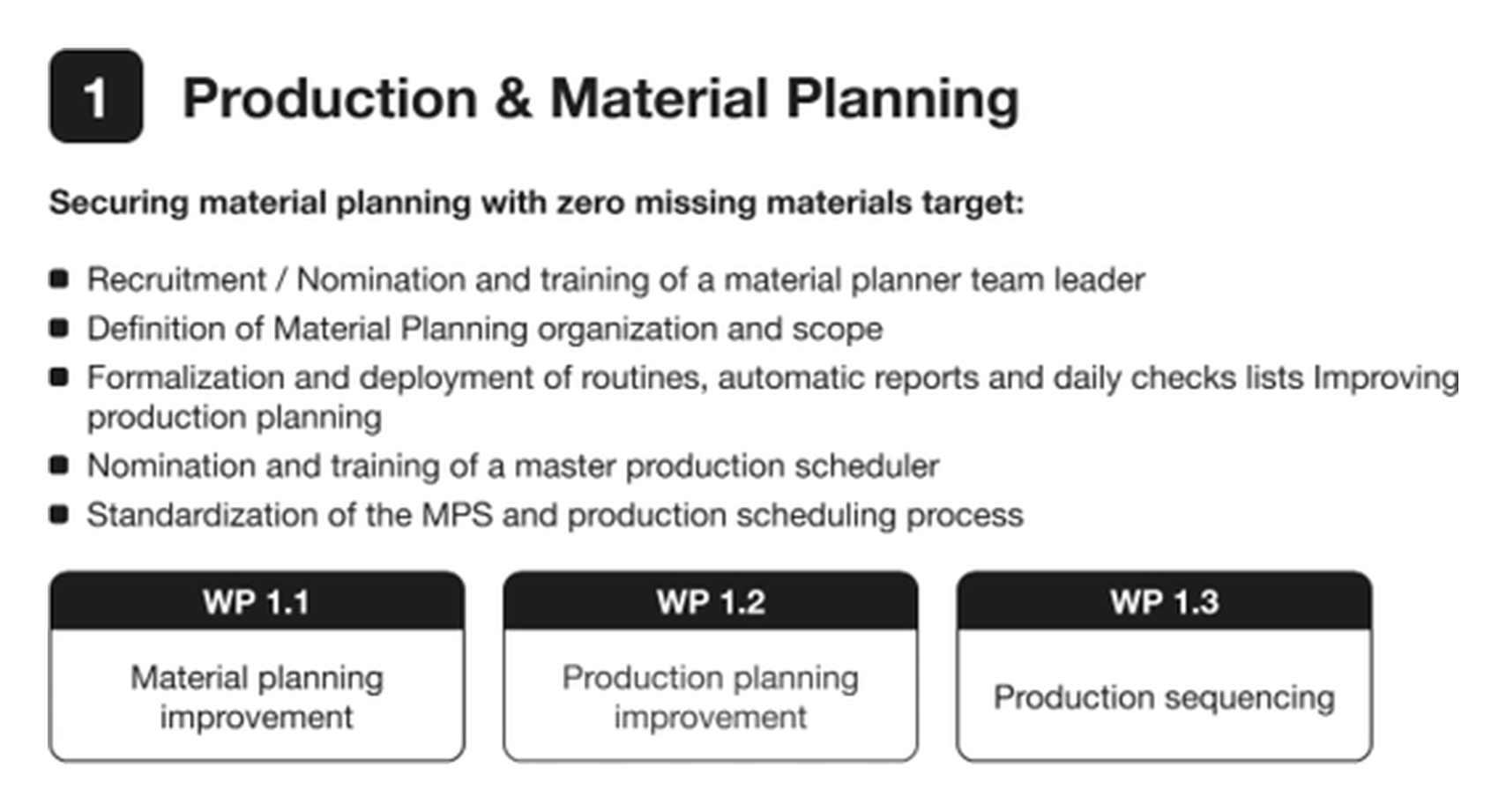
Break each objective into work packages with a clear target, named actions and an owner, reviewed every week.

In practice

Work packages with a target, an owner and a weekly review, and a short interval loop that catches deviation the same day.

The Turnaround BlueprintStep 6
Fig. 17, Material planning work package
20 · Stabilise

Step 7. The recovery momentum

Why it matters

Teams and the group need to see the curve bend early. A first visible win is what keeps everyone on board.

What you get from the book

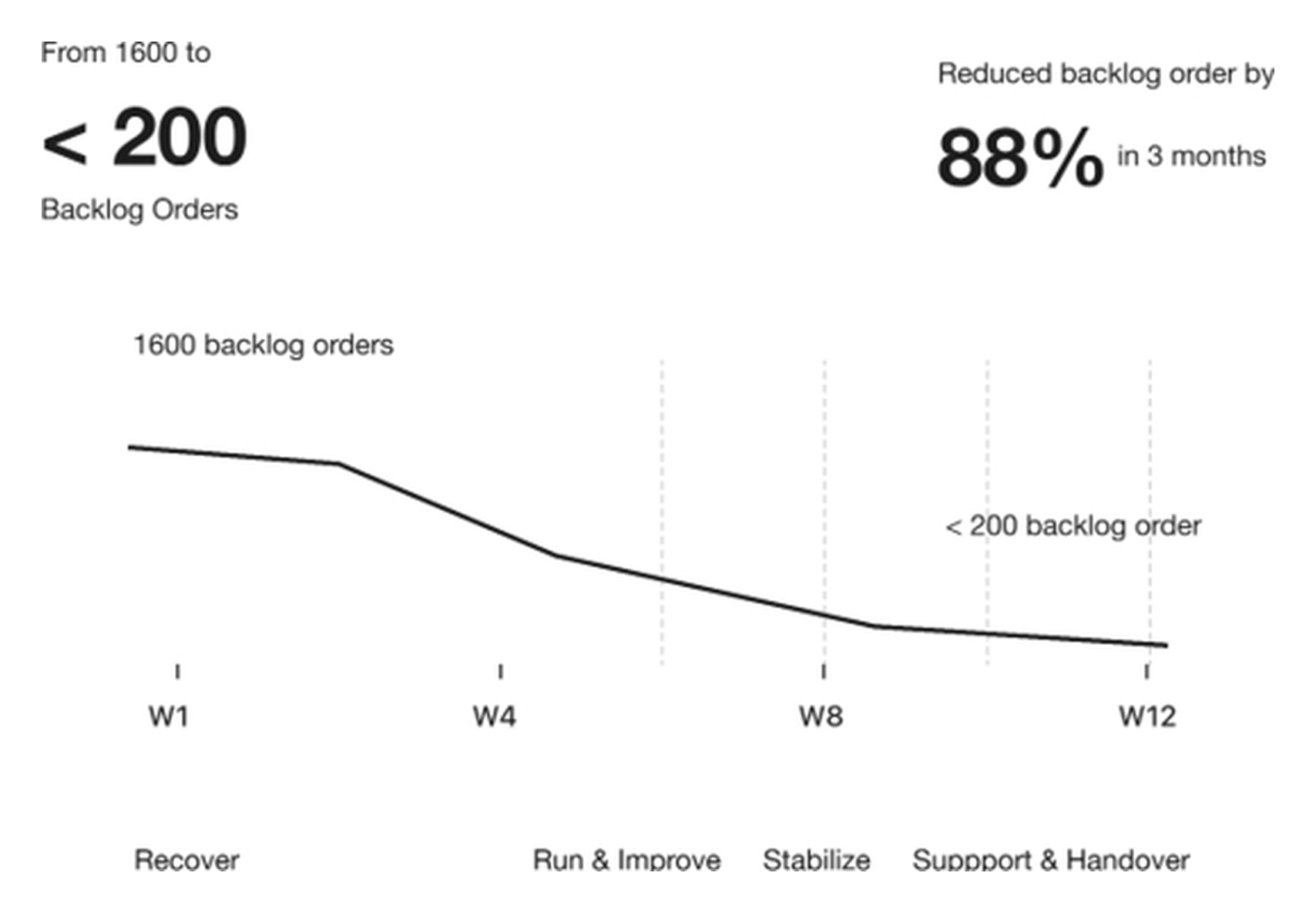
Read a real recovery: from 1,600 late orders to under 200, an 88% reduction in 3 months.

In practice

A first visible win on the curve, a short town hall to share it, then straight back to work.

The Turnaround BlueprintStep 7
Fig. 3, Late backlog recovery
20 · Stabilise

Step 8. Suppliers and customers

Why it matters

Your plant is only as strong as its weakest supplier. Major suppliers get their own taskforce: a turnaround within the turnaround.

What you get from the book

Set shared KPIs and success criteria with suppliers, and give customers realistic dates while aiming higher internally.

In practice

A dedicated taskforce for your worst suppliers, shared KPIs, and honest dates for customers while you aim higher internally.

The Turnaround BlueprintStep 8
"Your manufacturing organization is only as strong as its weakest supplier, so do not underestimate this fact."
From the chapter
20 · Stabilise

Step 9. Securing long-term performance

Why it matters

Ending the turnaround too early is how crises come back. Stability needs at least six months and new ways of working.

What you get from the book

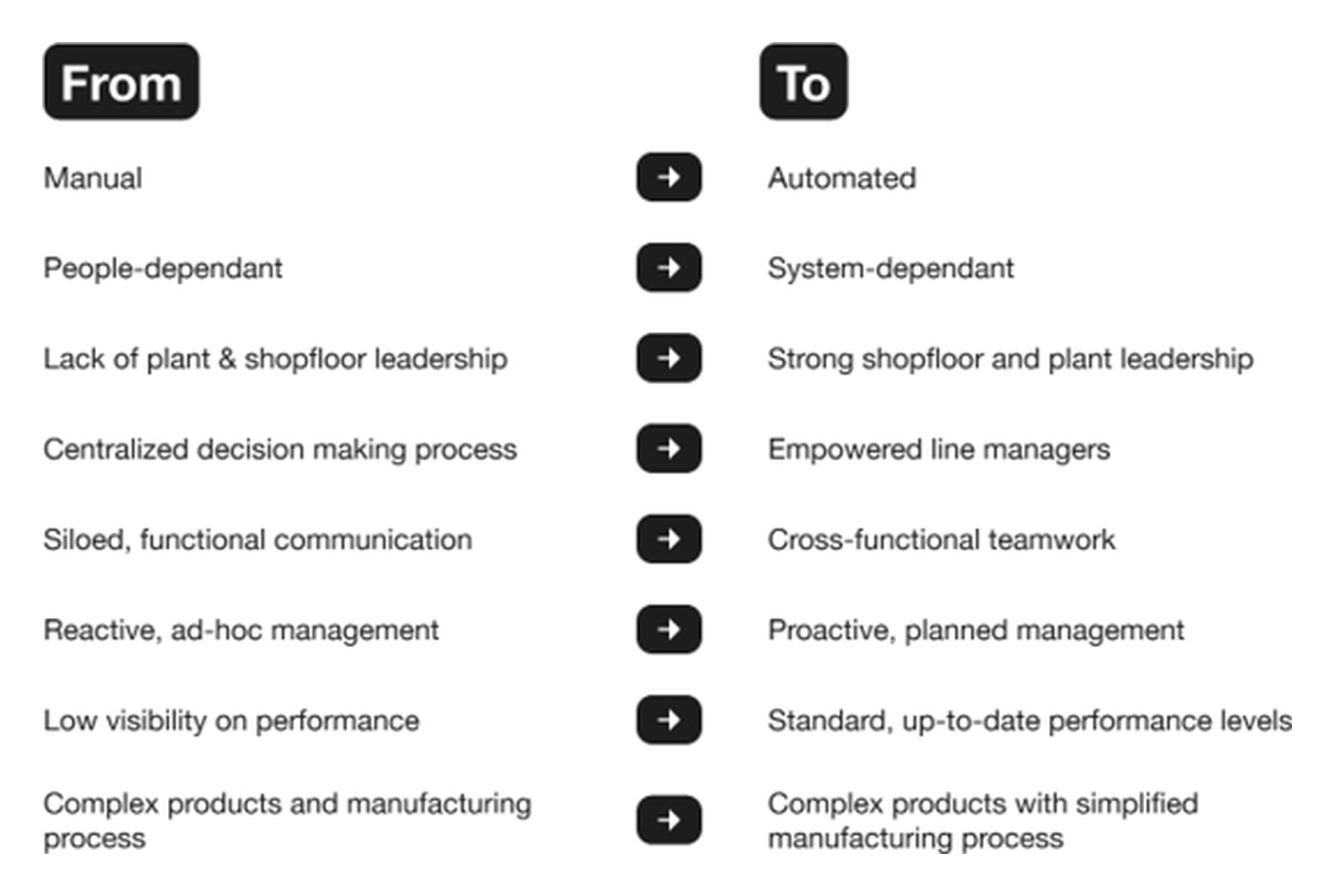
Map the shift from manual, people-dependent and reactive operations to systems, empowered managers and planned management.

In practice

A from/to map of how operations should run, and a team kept in place for at least six months to make it stick.

The Turnaround BlueprintStep 9
Fig. 4, From / to transformation
Buy the book →
Quoted in the book

In its own words.

"Let us be clear. 100% of crises are self-created. The root cause is internal, not external."

The Turnaround Blueprint
The Turnaround BlueprintBuy